Ever opened a cabinet and had a cascade of plastic lids land on your feet? Or dug through a drawer for a peeler while the onions burned? Kitchen cabinets and drawers are where good intentions go to die — unless you organize them around how you actually cook.
This guide walks you through a simple, professional approach called the work-zone method, then shows you exactly how to set up each cabinet and drawer.
⚡ Quick Answer
Organize kitchen cabinets and drawers by work zone: keep items near where you use them (prep, cooking, cleaning, serving). Store everyday items between hip and shoulder height, use drawer dividers for utensils, file pans vertically, and keep lids with their containers.
📋 In This Guide
Start With the Work-Zone Method
Professional kitchens are organized by station. You can do the same at home with four zones:
| Zone | Location | What to store there |
|---|---|---|
| 🥕 Prep | Counter between sink and stove | Knives, cutting boards, mixing bowls, measuring cups |
| 🍳 Cooking | Next to the stove | Pots, pans, spatulas, oils, spices |
| 🧽 Cleaning | Around and under the sink | Dish soap, sponges, towels, trash bags |
| 🍽️ Serving | Near the dishwasher or table | Plates, glasses, cutlery, serving dishes |
When everything lives next to where it’s used, you take fewer steps and put things away faster. It’s the single biggest upgrade most kitchens can make.
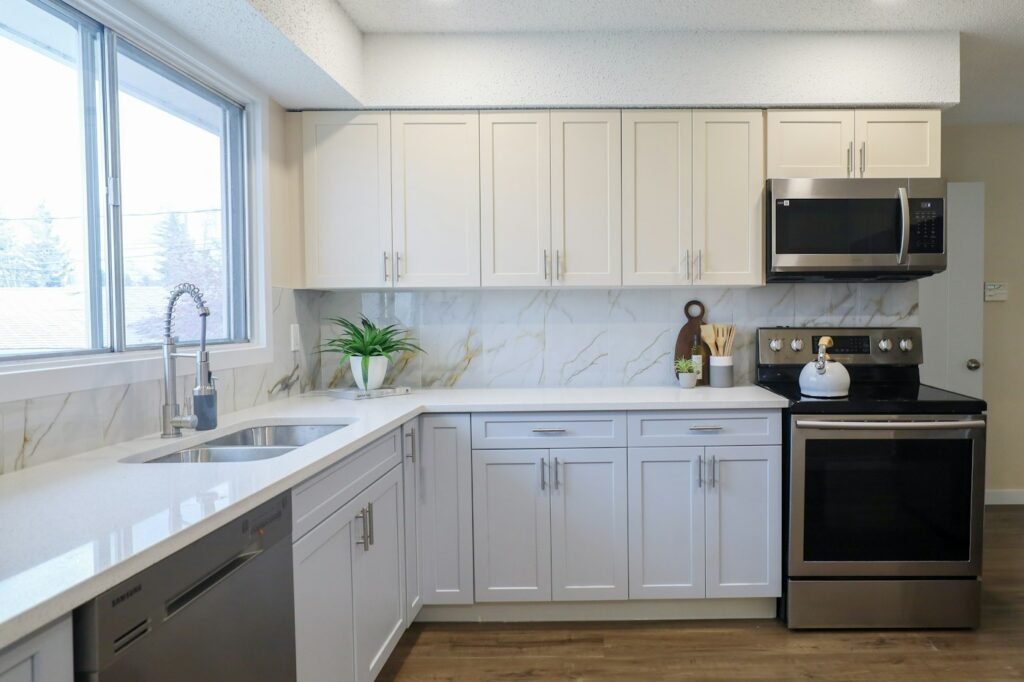
How to Organize Kitchen Cabinets
1. Empty and edit
Take everything out of one cabinet at a time. Donate duplicates (do you need four spatulas?), toss anything chipped, and match every container to a lid. Orphans go.
2. Store by frequency
Daily items go between hip and shoulder height. Seasonal items — roasting pans, holiday platters — go up high or to another room entirely.
3. File, don’t stack
Stacked pans mean lifting three to get one. Use a vertical rack to “file” baking sheets, cutting boards and pan lids like books on a shelf.
4. Add a second level
Shelf risers double the usable space in tall cabinets — perfect for mugs, plates and bowls.
5. Use the doors
Stick-on hooks and slim racks on the inside of cabinet doors hold measuring spoons, pot lids or cleaning gloves.
How to Organize Kitchen Drawers
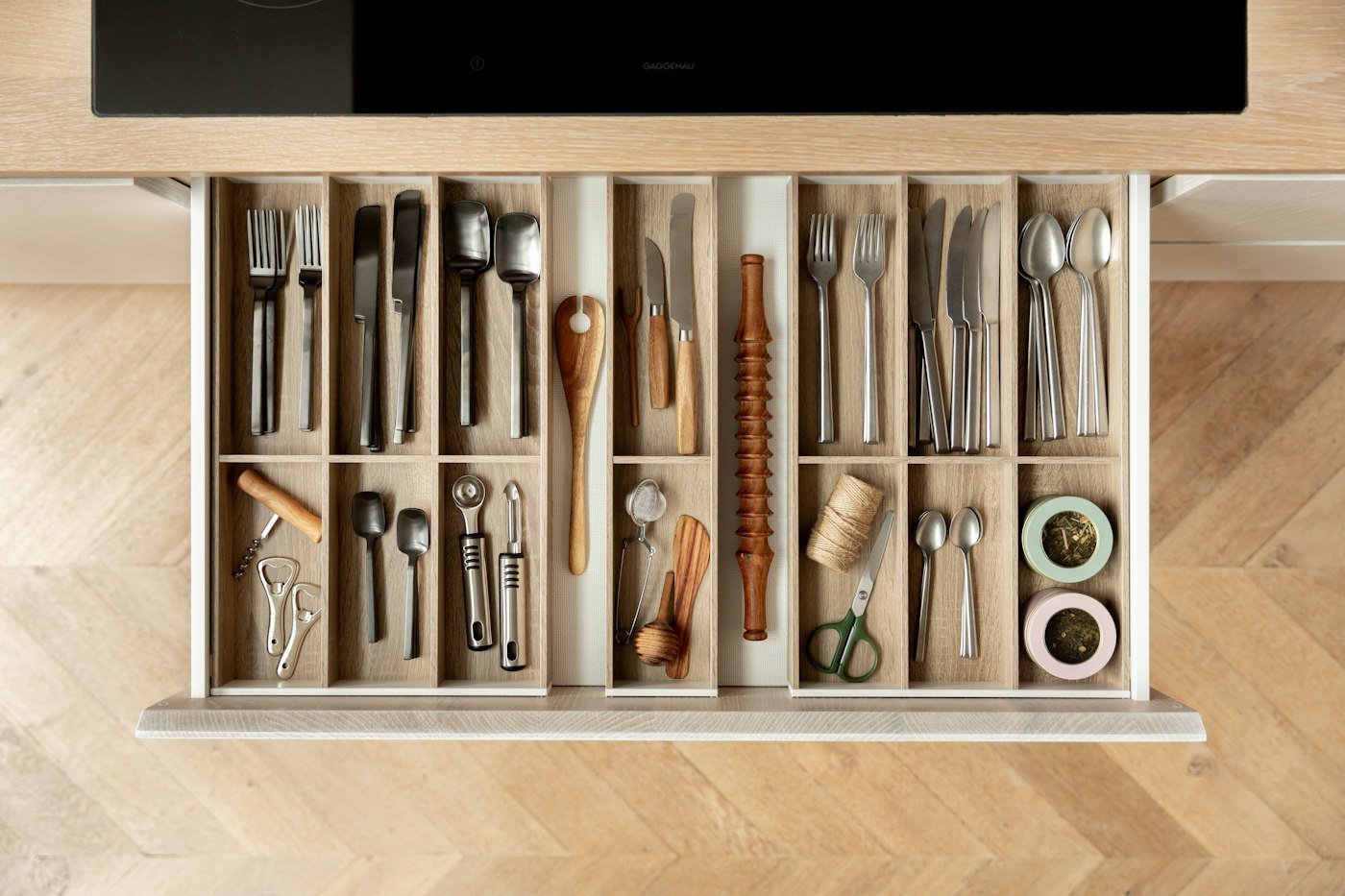
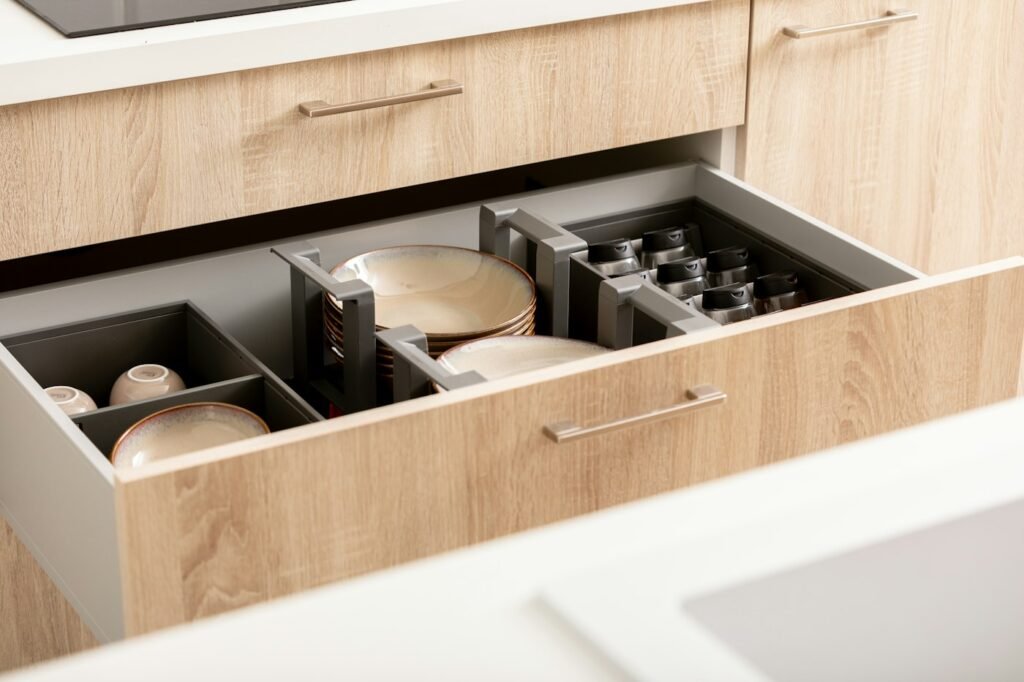
- Use adjustable dividers so every utensil has its own slot.
- One drawer, one purpose: cutlery, cooking tools, wraps & foil, and a (small!) junk drawer.
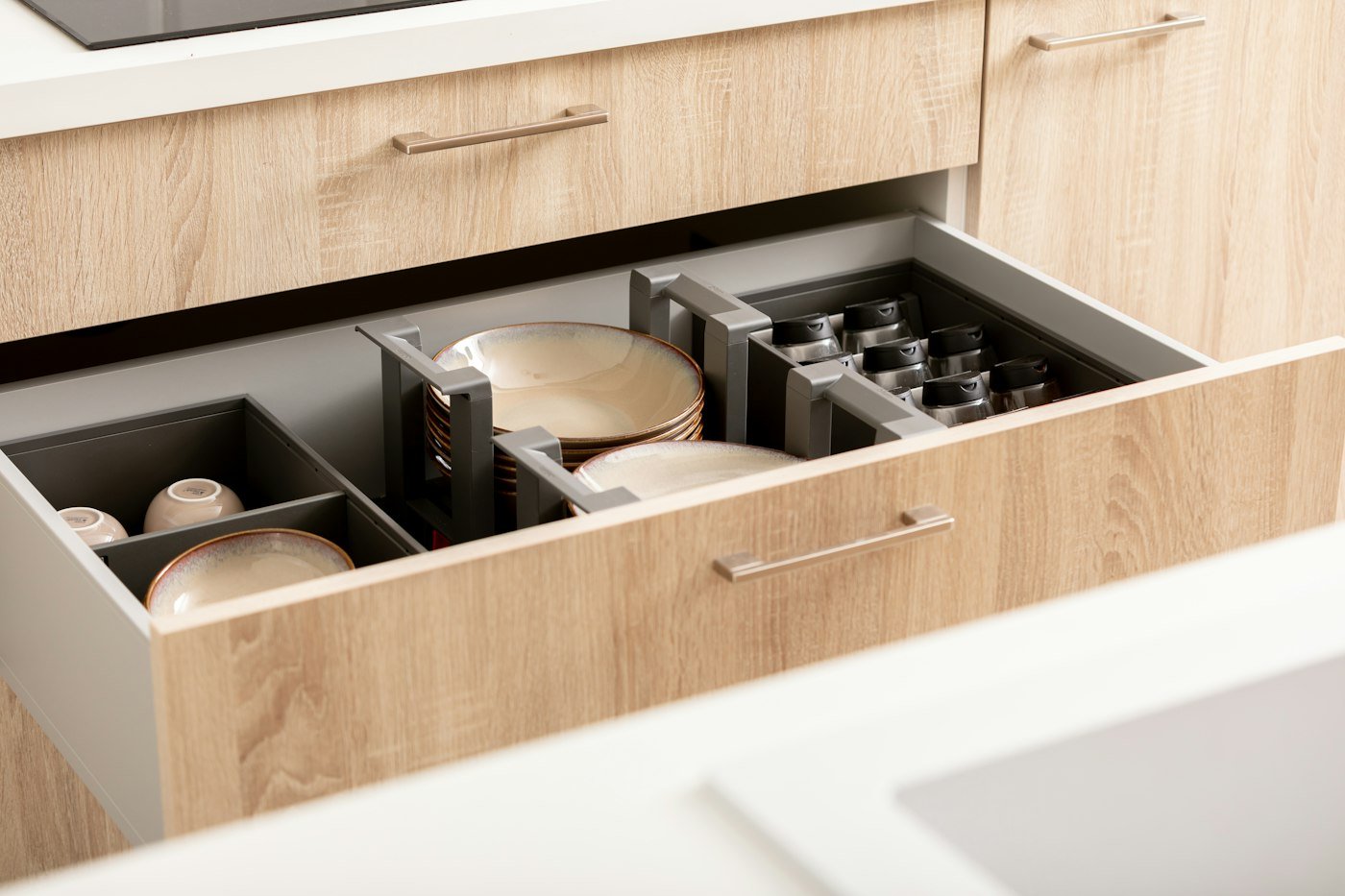
- Deep drawers are perfect for pots and dishes — often easier to reach than lower cabinets.
- Store spices in a drawer with an angled insert so you can read every label.
- Line drawers with non-slip liner to stop things from sliding around.
💡 Pro Tip
Common Mistakes to Avoid
- Buying organizers before measuring your cabinets
- Storing heavy items up high
- Keeping gadgets you haven’t used in a year
- Filling every inch — leave about 20% breathing room so things are easy to put away
Once your cabinets are done, move on to organizing your pantry and the often-forgotten space under the kitchen sink. For the bigger picture, our small kitchen organization hacks pillar guide ties it all together.
Watch: Organize Your Kitchen in One Day
The Ideal Kitchen Layout, Cabinet by Cabinet
| Cabinet / drawer | Best contents |
|---|---|
| Top drawer near stove | Cooking utensils, spatulas, tongs |
| Top drawer near dishwasher | Cutlery |
| Deep drawers near stove | Pots and pans with lids filed vertically |
| Upper cabinet near dishwasher | Everyday plates, bowls, glasses |
| Corner cabinet | Turntable for rarely used appliances |
| Cabinet beside the fridge | Food storage containers, wraps |
| Highest shelves | Seasonal platters, party items |
Small Appliance Strategy
Countertop appliances are one of the biggest sources of kitchen clutter. A simple rule: if you use it daily, it can stay out. If you use it weekly, store it in an easy-to-reach lower cabinet. Monthly or less? Top shelf or another room.
Maximize Awkward Spaces
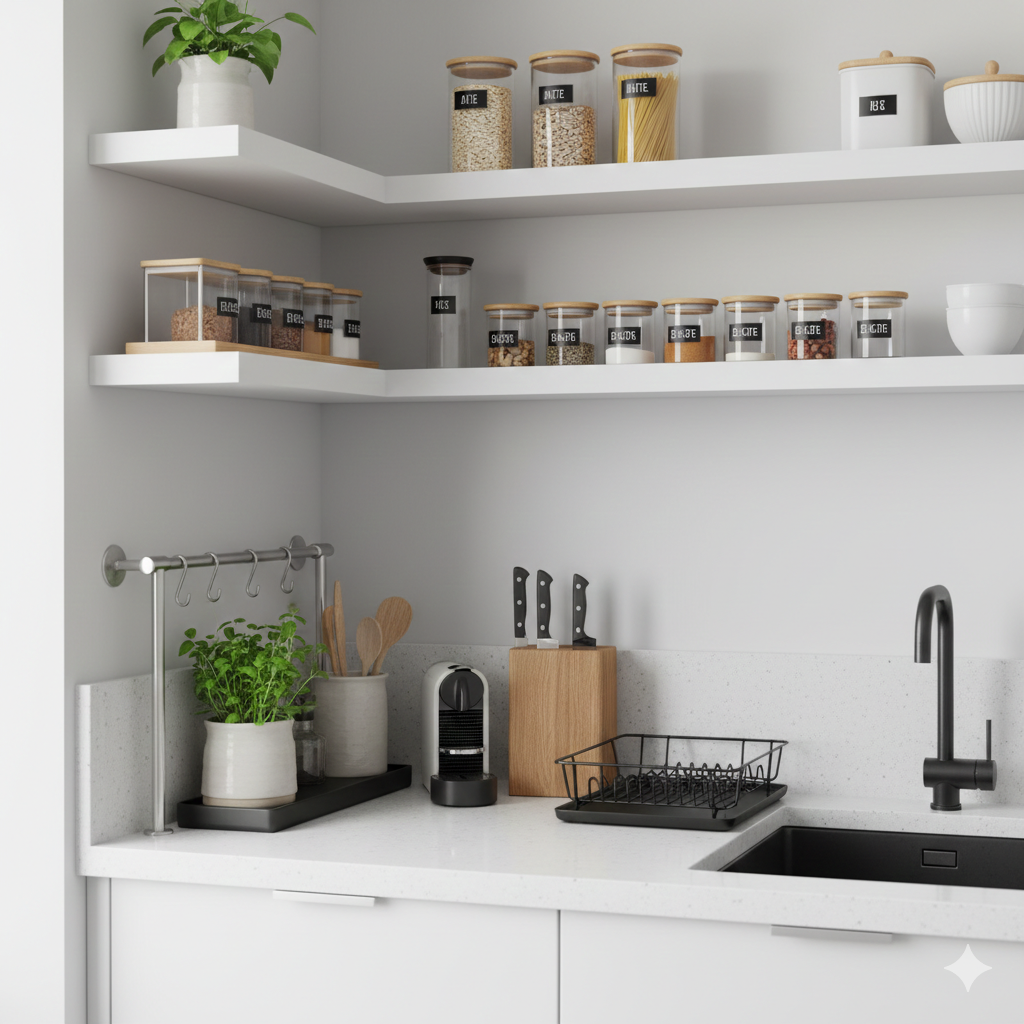
- Blind corners: two-tier turntables or pull-out baskets.
- Above the fridge: lidded bins for rarely used items.
- Toe kicks: some kitchens can fit slim drawers for baking sheets.
- Inside doors: adhesive racks for lids, measuring spoons or cleaning gloves.
- Under-shelf baskets add a second level for wraps and towels.
💡 Pro Tip
Renter-Friendly Upgrades
- Adhesive under-cabinet lighting to brighten dark corners.
- Tension-mounted shelf risers.
- Removable drawer liners.
- Freestanding pot racks and rolling carts.
Frequently Asked Questions
What should go in upper kitchen cabinets?
Everyday dishes and glasses near the dishwasher, and lighter, less-used items on the top shelves. Avoid storing heavy appliances up high.
Where should pots and pans go?
In a deep drawer or lower cabinet right next to the stove. Use a vertical rack for lids and a pan organizer so you can pull out one pan without lifting the others.
How do I organize Tupperware?
Match every container to a lid, recycle orphans, nest containers by size and store lids vertically in a bin or file rack.
How do I organize a kitchen with very few cabinets?
Use vertical space with wall rails and shelves, add a rolling cart or freestanding pantry unit, and keep only what you truly use.
How do I stop my kitchen drawers from getting messy?
Use adjustable dividers so every item has a slot, keep one category per drawer and do a 2-minute tidy each week.
📚 More Kitchen Organization Guides
📌 Start here: Small Kitchen Organization Hacks · See all Kitchen guides →
✍️ Written by the Home Hacks Collective team — practical, renter-friendly organizing ideas for real homes. Have a question? Drop it in the comments below.