

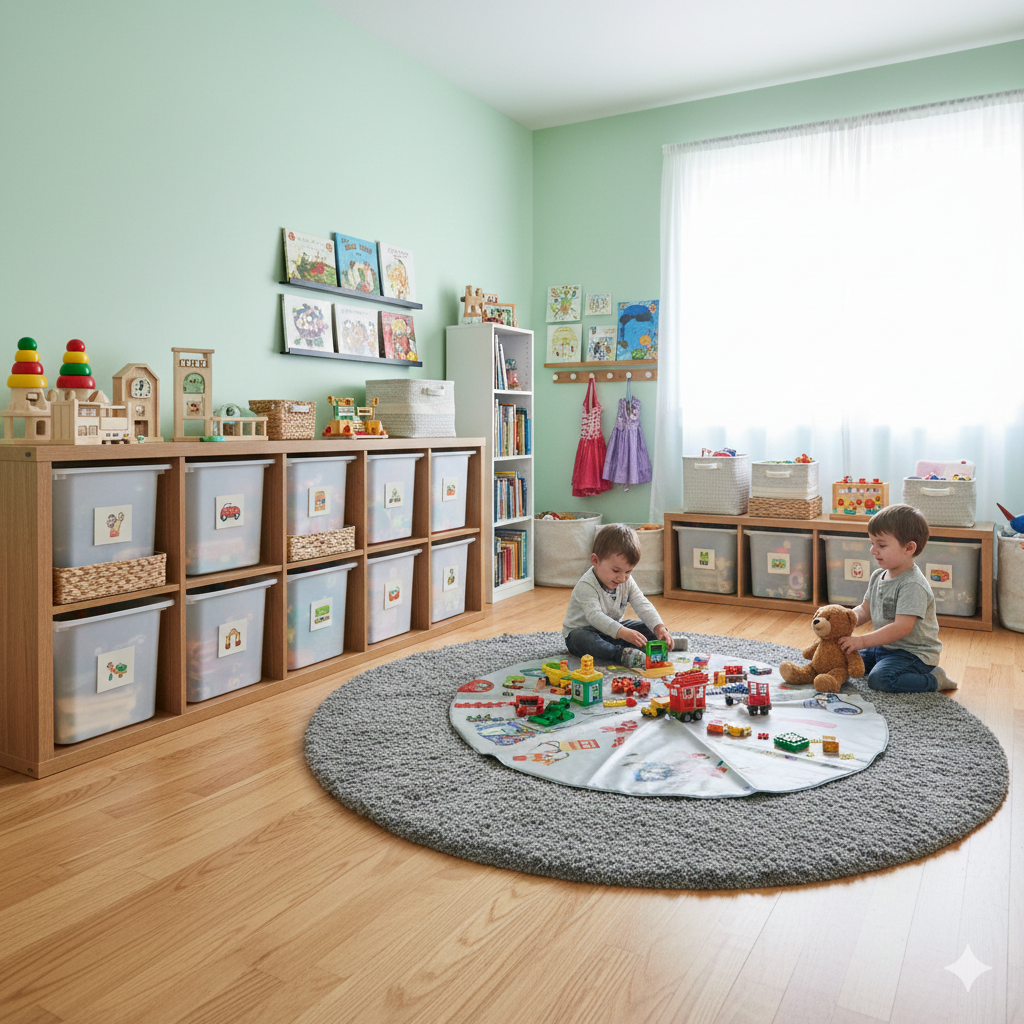
If you’ve ever experienced the sharp pain of stepping on a stray Lego in the middle of the night, you know that a child’s room can be the most challenging place in the house to keep organized. It often feels like a losing battle: you clean it up, and five minutes later, it’s a “toy tornado” again.
At Home Hacks Collective, we believe the key to a tidy kids’ room isn’t just better storage—it’s creating a system so simple that even a toddler can follow it. Here is how to create a kid-friendly environment that encourages independence and keeps the clutter at bay.
1. The “Toy Rotation” System
The biggest cause of a messy room is simply having too many toys out at once. Instead of overflowing bins, implement a toy rotation. Keep 70% of the toys in opaque bins in a closet or garage and only keep a few sets out at a time.
The Benefit: It reduces “choice paralysis” for the child, makes cleanup take only minutes, and makes “old” toys feel brand new when they are rotated back in.
2. Low-Level Shelving for Easy Access
Organization fails when children can’t reach their own things. Use low-level open shelving where bins are at your child’s height. When they can easily grab a bin and—more importantly—put it back themselves, you are teaching them the habit of tidying up from an early age.

Top Pick: 9-Bin Natural Wood Toy Storage Organizer
⭐ 4.6 out of 5 · 6,900+ ratings on Amazon (at time of writing)
What buyers love: the modern look and slim width that fits small corners.
Common complaints: some found the bins too small and shallow for dolls and larger toys.
Our take: Best for small toys, cars and blocks.
3. Clear Bins with Picture Labels
If your children haven’t mastered reading yet, words like “Blocks” or “Dolls” on a label won’t help them. Use clear plastic bins so they can see the contents, and add labels with actual pictures of the items that go inside. This visual cue empowers them to take part in the “reset” process.

Top Pick: Large Clear Stackable Toy Bins
⭐ 4.2 out of 5 · 20,700+ ratings on Amazon (at time of writing)
What buyers love: finally getting shoes off the floor in neat, visible stacks.
Common complaints: about 14% of ratings are 1–2 stars, with some reporting damaged doors or parts.
Our take: Inspect on arrival — great for kids’ and adults’ shoes.
4. Over-the-Door Stuffed Animal “Zoos”
Plush toys are notorious for taking up bed and floor space. An over-the-door mesh organizer with deep pockets is a genius way to house an entire “zoo” of stuffed animals. It keeps them off the ground but keeps their friendly faces visible so your child can still pick a favorite for bedtime.
5. Create a Dedicated “Art Station”
Crayons, markers, and paper can quickly migrate all over the house. Use a rotating desktop caddy to keep art supplies centralized. When all the “tools” live in one spinning tray, it’s much easier for a child to keep their creative mess contained to the desk.

Top Pick: Rotating Art Supply Organizer Caddy
⭐ 4.8 out of 5 · 870+ ratings on Amazon (at time of writing)
What buyers love: how kids can reach every crayon and marker without crowding around the table.
Common complaints: very few — about 1% of ratings are 1–2 stars.
Our take: A favorite for art corners and homework tables.
6. Use a “Catch-All” Basket for Quick Resets
Sometimes you just don’t have time for a full sort. Keep one large, stylish woven basket in the corner of the room as a “catch-all.” At the end of the day, anything left on the floor goes in the basket. It’s an instant floor-clearing hack that takes less than 60 seconds.
The Bottom Line
Kids’ room organization isn’t about perfection; it’s about accessibility. When you create systems that work for a child’s height and developmental level, you’re not just cleaning a room—you’re teaching your children valuable life skills and reclaiming your own peace of mind.
Ready to reclaim your floors? Explore our Kids’ Organization Collection for more durable and stylish storage solutions!
Watch: See It in Action
Products in This Guide: What Amazon Buyers Say
We read recent Amazon customer reviews for every product recommended above. Here’s a quick summary to help you decide.
| Product | Rating | Ratings | Buyers’ #1 praise | Most common complaint |
|---|---|---|---|---|
| Humble Crew 9-Bin Toy Organizer | 4.6★ | 6,900+ | Modern look, slim footprint | Bins too small for big toys |
| Kuject Clear Shoe Boxes (12) | 4.2★ | 20,700+ | Gets shoes off the floor | Occasional damaged doors/parts |
| Hapinest Rotating Art Organizer | 4.8★ | 870+ | Ends crowding at the table | Very few |
Ratings, review counts and prices change often — always check the current listing. Review summaries are our paraphrase of recurring themes, not quotes.
Kids’ Room Storage by Age
| Age | Storage that works | Tip |
|---|---|---|
| Toddler | Low open bins, soft cubes | Picture labels |
| Preschool | Bin organizers, cube shelves | One category per bin |
| School age | Desk storage, labeled drawers | Let them help plan |
| Tween/teen | Closed storage, under-bed drawers | Give them ownership |
Create Zones in a Kids’ Room
- Sleep zone: bed, nightlight, a few books.
- Play zone: rug, toy bins at kid height.
- Creative zone: small table, art supplies in a caddy.
- Dressing zone: low hooks and a hamper.
Kid-Friendly Decluttering
- Declutter with your child, not behind their back, when they’re old enough.
- Use “keep, donate, trash” bins and let them decide some items.
- Before birthdays and holidays, make space for new things.
- Rotate toys so fewer are out at once.
Mistakes to Avoid
- One huge toy box where everything gets lost.
- Storage that’s too high for kids to use.
- Lids that are hard to open or could pinch fingers.
- Unanchored tall furniture.
💡 Pro Tip
A Real-Life Example
Take a shared bedroom for a three- and a six-year-old, where a single large toy box held everything and the floor was covered by mid-morning.
The parents replaced the toy box with a cube shelf and fabric bins — one category per bin — and added picture labels. Half the toys went into a closet rotation. Each child got two hooks for jackets and backpacks and a small basket by the bed for books.
Clean-up dropped from 30 minutes to about 10, and the kids could finally find their favorite toys without dumping everything out.
✅ Key Takeaways
- Replace deep toy boxes with categorized bins.
- Use picture labels for pre-readers.
- Rotate toys so fewer are out at once.
- Give each child their own defined space.
- Keep storage at kid height.
Frequently Asked Questions
How many toys should be out at once?
A small selection works best — a few categories at a time. Rotate the rest every couple of weeks to keep play fresh and clean-up quick.
What is the best toy storage for a small bedroom?
A cube shelf with fabric bins plus under-bed storage. Both keep toys at kid height and use space efficiently.
How do I teach kids to tidy up?
Use picture labels, keep bins open and low, and make tidying part of a daily routine — before dinner or before bedtime stories.
📚 Kids & Family: The Complete Series
🧭 New to decluttering? Start with our complete room-by-room decluttering guide.